Wheel Loaders
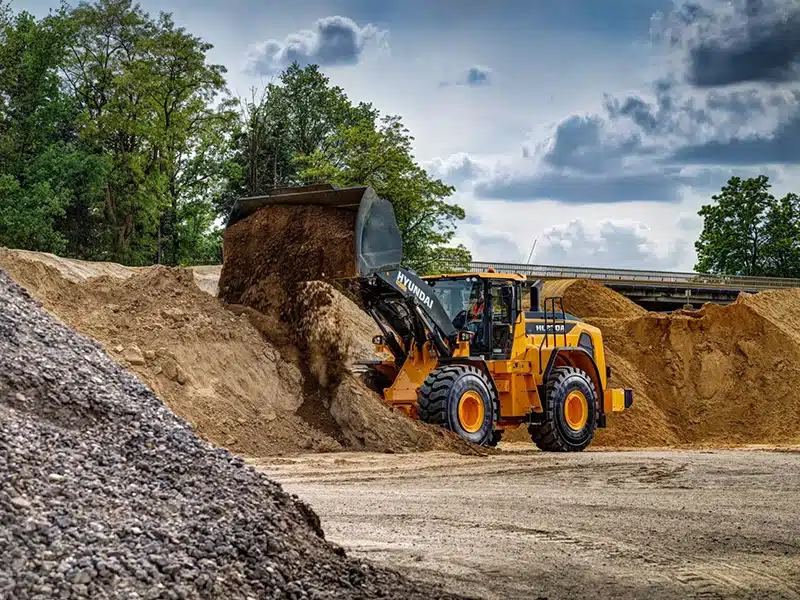
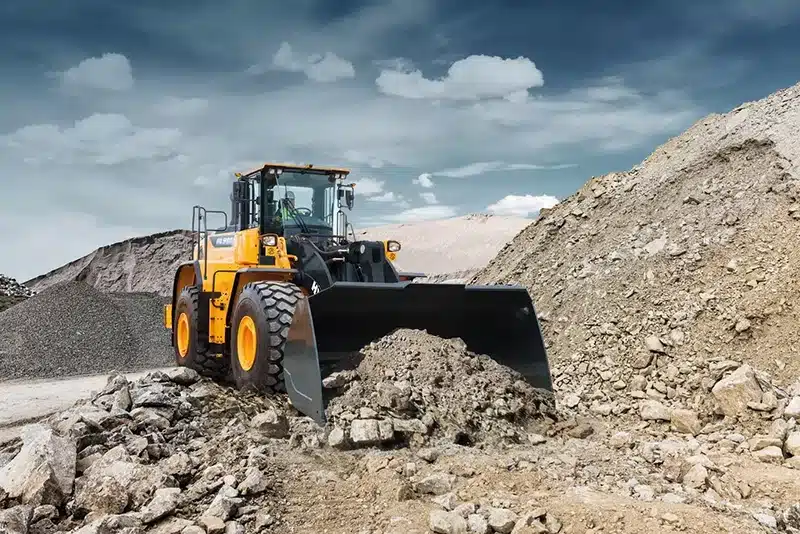
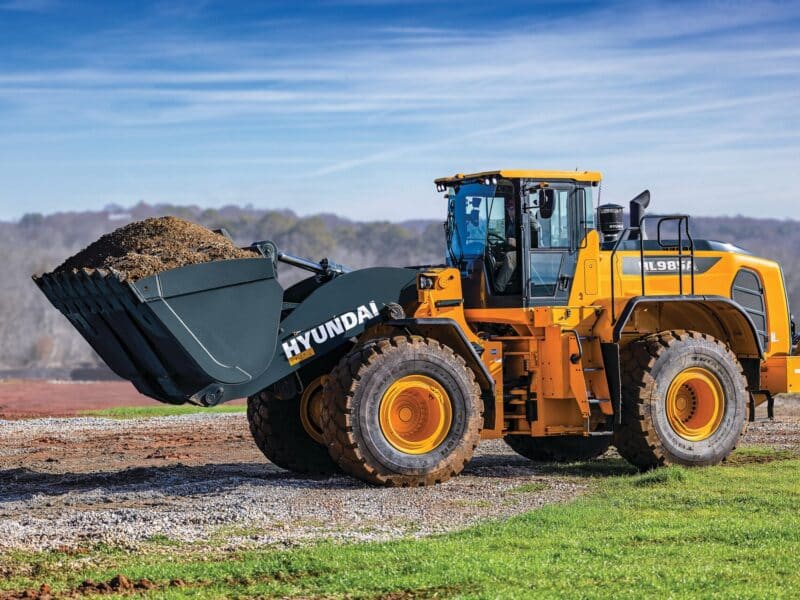
Powerful loading performance, advanced hydraulics and full manufacturer warranty on every machine. 8 Hyundai wheel loader models built for construction, quarrying, recycling, agriculture, waste handling and high-volume material movement across the UK.
available
Powerful, efficient and built for heavy-duty productivity, the HL970A combines Stage V performance with intelligent loading technology and exceptional operator comfort.
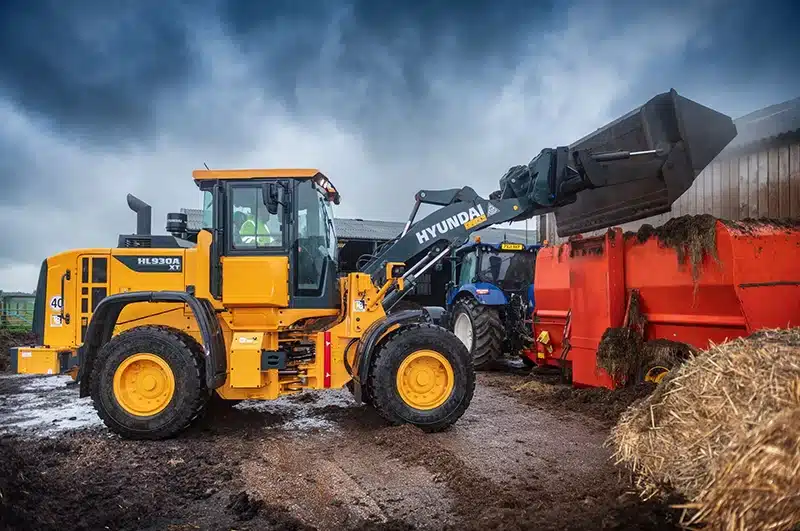
Compact enough for mixed sites but built with full-size loader productivity, the HL930A combines Stage V power, integrated weighing and precise load-sensing hydraulics.
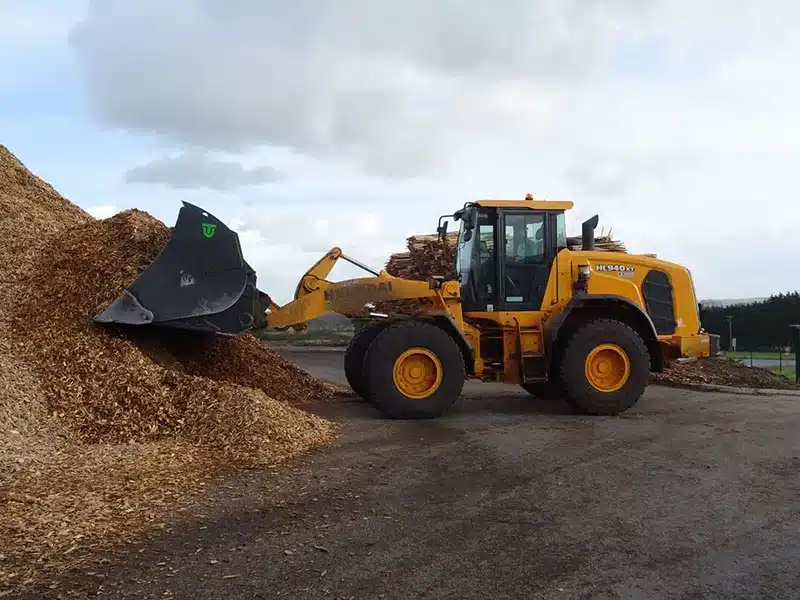
Balanced loading power, accurate weighing and a parallel Z-bar linkage make the HL940A a versatile 13-tonne loader for construction, recycling and aggregate handling.
Strong breakout force, integrated weighing and efficient Stage V power give the HL955A the production capability for demanding loading, recycling and aggregate work.
High-capacity loading, 250 kW Stage V power and strong tipping performance make the HL975 a heavy-duty choice for quarrying, mining and bulk material handling.
High breakout force, large bucket options and 265 kW Stage V power make the HL980A a heavy-production loader for quarries, mines, demolition and industrial…
Hyundai's largest Stage V wheel loader combines 321 kW power, up to 7.0 m³ bucket capacity and two-pass loading capability for maximum quarry and…
Why Choose a Hyundai Wheel Loader?
Hyundai wheel loaders are built for the demands of UK material handling and loading operations – tough working conditions, repetitive loading cycles and high-volume movement, with the power, hydraulic performance and operator comfort needed for long working days across construction, quarrying, recycling, agriculture and waste handling.
Full OEM backing, genuine parts supply and trained technicians at every stage of ownership.
Full 2-year / 3,000-hour Hyundai manufacturer warranty. Genuine parts available next-day from Rygor’s parts hubs.
Enquire today and a Rygor Plant specialist will contact you within hours Mon–Fri with pricing, availability and options.
Flexible HP and lease options with VAT-only deposits available.
Low emissions, low fuel consumption, compliant on all UK sites.
Strong breakout force, powerful hydraulics and high-capacity buckets help move more material efficiently across sites.
Real-time machine monitoring, hour tracking and remote diagnostics.
Mobile engineers across South West, South East, Wales and Midlands – planned maintenance and emergency breakdown.
What Are Wheel Loaders Used For?
Hyundai wheel loaderss are designed for versatility across a wide range of
site types and project scales.
Loading aggregates, moving materials, site clearance and general earthmoving
Stockpile handling, truck loading and high-volume aggregate movement
Loading feed, moving materials, yard work and bulk handling
Handling bulk materials, loading hoppers and managing processing yards
Get in touch
Whether you’re buying a machine, exploring ready-to-go stock, arranging a demo or need urgent breakdown support – our team is here and responds fast.
Frequently Asked Questions
A wheel loader is a wheeled loading machine with front-mounted lift arms, most commonly used with a bucket. In the UK, wheel loader and loading shovel are often used to describe the same type of machine. Wheel loaders are designed to load, carry and stockpile material efficiently over short to medium distances, with different machine sizes and bucket options available for construction, recycling, agriculture, quarrying and industrial handling.
Wheel loaders are used for loading trucks and hoppers, stockpile management, rehandling aggregates, quarry work, recycling, waste handling, agriculture and general site material movement. Their combination of bucket capacity, breakout force, tipping stability and travel speed makes them highly productive for repeated loading cycles. Attachments can also extend a wheel loader beyond bucket work into fork, grab and specialist material-handling applications.
The right wheel loader depends on the material density, target bucket size, truck or hopper height, required cycle time, travel distance and available working space. Operating weight and engine power give a useful indication of machine class, but bucket capacity, tipping load and breakout force are often more important for matching the loader to production targets. Tyre choice and site underfoot conditions should also be considered.
Tipping load describes the load at which a wheel loader reaches its stability limit under a defined test condition, while breakout force describes the force available to roll or lift the bucket through material. Both figures help compare loading performance, but they should be read alongside bucket size, machine geometry and operating conditions. For articulated loaders, tipping-load figures may differ between straight and articulated positions.
A wheel loader is generally larger and is designed for higher-volume loading, carrying and stockpile work. A skid-steer loader is more compact, turns within a much tighter area and is commonly used as a versatile attachment carrier on smaller or more congested sites. The best choice depends on material volume, lift height, travel distance, access, ground conditions and the range of attachments needed.
Yes. Wheel loaders can be equipped with a variety of attachments depending on the coupler, hydraulic system and machine size. Common examples include forks, grabs, high-tip buckets, light-material buckets and specialist handling tools. Attachment choice should take account of load centre, machine tipping capacity, hydraulic requirements and the material being handled so that productivity and stability are maintained.
Tyre selection has a major effect on traction, ride quality, wear and operating cost. Quarry, recycling, industrial and agricultural applications can place very different demands on tyres. Consider surface type, sharp material, travel distance, wheel slip and load cycles. Some wheel loaders also offer driveline, differential or transmission options designed to improve traction or reduce unnecessary wheel spin in particular applications.
Wheel loader pricing depends on machine size, bucket package, tyres, coupler, weighing technology, transmission and other factory or dealer options. A quarry specification can differ substantially from a machine intended for agriculture or general construction. Rygor Plant can help match the Hyundai wheel loader range to the application and provide current pricing, availability and finance information for the selected configuration.